



Introduction
There is a specific dread that every Las Vegas homeowner knows. It happens in July. You walk to the mailbox, grab the envelope from NV Energy, and take a deep breath before opening it. You see a number that looks more like a mortgage payment than a utility bill.
But the cost isn’t the only pain point. It is the discomfort. It is the master bedroom that never gets below 78 degrees, no matter how low you set the thermostat. It is the blast of heat you feel when you walk past a west-facing window. It is the constant hum of the A/C units running 24/7, struggling to keep up with the 115-degree Mojave sun.
For years, we accepted this as the “price of living in paradise.” We assumed that if you wanted a big luxury home in The Ridges or Summerlin, you just had to deal with big bills and hot rooms.
But that assumption is outdated.
True luxury isn’t just about marble floors and Wolf ranges. True luxury is comfort. It is a home that stays cool and quiet when the world outside is scorching. It is a home that sips energy instead of guzzling it.
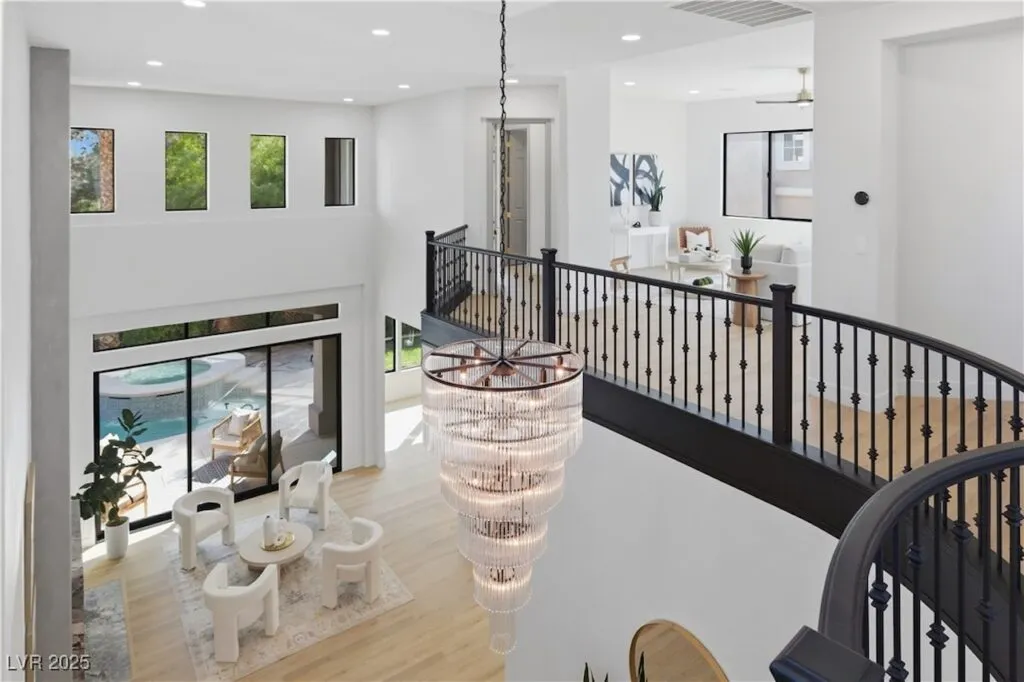
At Luker Construction, we believe that building science is just as important as interior design. We specialize in High-Performance Custom Homes that are engineered to act as a fortress against the Las Vegas heat. We don’t just build homes that look cool; we build homes that feel cool.
The Villain: The “Energy Sieve”
The villain in this story is The Energy Sieve.
Most production homes (and even many older custom homes) were built to minimum code requirements. They are essentially “sieves” for energy.
- The Thermal Bridge: Standard wood framing acts as a bridge, transferring heat from the hot exterior stucco straight into your drywall. You can actually feel the heat radiating from the walls in the summer.
- The Window Weakness: Standard builder-grade windows are the biggest weak point. They let in massive amounts of solar heat gain, turning your living room into a greenhouse and fading your expensive furniture.
- The Leaky Envelope: Tiny gaps around outlets, vents, and plates allow conditioned air to escape and hot, dusty desert air to infiltrate. You are paying to cool the neighborhood.
Living in an Energy Sieve is frustrating. You are constantly fighting the thermostat. You are uncomfortable in your own home. And you are throwing money away every single month.
The Guide: The Building Scientists
We approach custom home building with the mindset of a scientist. Luker Construction uses advanced building techniques to seal, insulate, and protect your home.
Our philosophy of “Precision” means we pay attention to the things you can’t see behind the drywall.
- We Break the Bridge: We use advanced framing techniques and continuous exterior insulation to stop heat transfer before it hits your studs.
- We Seal the Shell: We treat the house as a sealed system. We use expanding foams and sealants to close those microscopic gaps, keeping the dust and heat out.
- We Optimise Orientation: We don’t just plop a house on a lot. We analyze the solar path to ensure your windows capture views without capturing excess heat.
The Plan: Engineering a Cool Sanctuary
How do we build a home that laughs at 110-degree weather? We use a holistic 4-step energy strategy.
Step 1: Passive Solar Orientation
The best way to cool a house is to stop it from getting hot in the first place. During the Discovery phase, we sit down with your architect to orient the home correctly.
We design deep overhangs (cantilevers) that shade your glass in the summer when the sun is high, but allow the warm sun to enter in the winter when the sun is low. This is free energy efficiency provided by geometry.
Step 2: High-Performance Glazing
In a modern desert home, you want walls of glass. But you don’t want the heat.
We specify Thermally Broken Aluminum frames and Low-E3 glass. This glass has invisible metallic coatings that reflect infrared heat (the burning sensation) while letting visible light pass through. You can stand in front of a Luker window in July and not feel the burn.
Step 3: The “Super-Insulated” Envelope
We go beyond pink fiberglass batts. We often use Spray Foam Insulation in the roof deck and walls.
Spray foam does two things: it insulates with a high R-value, and it air-seals the cavity. It creates a “cooler” effect (like a Yeti cooler) that keeps your conditioned air inside for hours, allowing your HVAC system to coast rather than sprint.
Step 4: Efficient Mechanicals
We install variable-speed HVAC systems that run at lower, quieter speeds to maintain a constant temperature, rather than blasting on and off. We pair this with Smart Home Automation that learns your schedule and optimizes cooling when energy rates are lowest.
The Transformation: Silence and Savings
Imagine walking into your new custom home on the hottest day of the year.
It is 112 degrees outside. But inside, it is a crisp 72 degrees.
The house is silent. You don’t hear the A/C roaring because it is running efficiently on low. You don’t hear the traffic outside because the spray foam and heavy glass block the noise.
You walk past the massive sliding glass door. You enjoy the view of the shimmering heat waves on the pavement, but you don’t feel them.
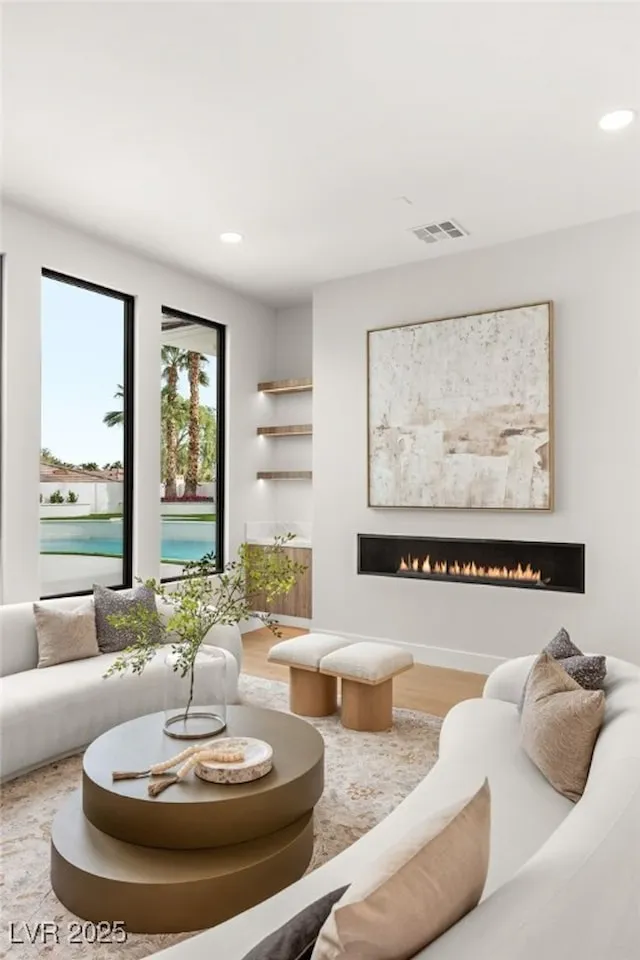
And when you open your utility bill? It is a fraction of what your neighbors are paying.
You have built a home that protects you. You have built a home that respects your resources. You have built a home that is truly comfortable in every room, at every hour.
This is the level of execution Michael R. referred to when he praised our “great experience from concept to completion” an experience that includes the technical performance of the home, not just the aesthetics.
Your Next Step
You can build a standard home and pay the “comfort tax” for the rest of your life. Or, you can build a high-performance home that pays you back in comfort and savings.
Don’t let the desert dictate your comfort. Take control of your environment.
Are you ready to build the coolest house on the block?
Schedule Your High-Performance Home Consultation with Luker Construction
Contact us and let’s build a home that beats the heat.
Frequently Asked Questions
Does energy-efficient construction cost more upfront?
Yes, marginally. High-performance glass, spray foam insulation, and variable-speed HVAC systems have a higher initial material cost than builder-grade options. However, this is an investment with a guaranteed return. The monthly savings on utility bills, combined with the increased lifespan of your mechanical equipment (because it doesn’t have to work as hard), typically pays for the upgrade cost within a few years. After that, it is pure savings.
Is spray foam really better than regular insulation?
In the Las Vegas roofline, absolutely. Traditional “vented” attics allow superheated air (often 140+ degrees) to sit right above your ceiling. This heat inevitably pushes into your living space. Spray foam creates an “unvented” attic assembly that brings the attic space into the conditioned envelope of the house. This means your ductwork is running through a 75-degree space instead of a 140-degree space, which is a massive efficiency gain.
Can I have a “Net Zero” home in Las Vegas?
Yes. Las Vegas is one of the best places in the world for solar power. By building a “tight” and efficient home first (reducing the energy load), we can then size a solar array to offset 100% of your energy usage. We can coordinate the solar installation during the build process so conduit runs are hidden and the panels are integrated into the roof design aesthetically.
Do you use “Smart Glass”?
We are seeing more interest in electrochromic glass (smart tinting glass) for luxury custom homes. This glass can darken automatically when the sun hits it, eliminating the need for blinds. While it is a premium feature, it is the ultimate solution for preserving views in west-facing rooms. We can discuss if this fits your budget during the Design & Selections phase.
How do I know my house is actually efficient?
We don’t just hope; we test. We can bring in third-party energy raters to perform a HERS (Home Energy Rating System) test or a Blower Door Test at the end of construction. This creates a scorecard for your home, proving its efficiency. A low HERS score not only gives you peace of mind but can also increase the resale value of your home.
About the Author
The Luker Construction Editorial Team
We are builders who geek out on building science. We know that in the desert, a home has to be a machine for living. We are passionate about using the latest technology to create homes that are sustainable, comfortable, and resilient.
Our blog aims to look under the hood of luxury construction. We want to explain why the stuff behind the walls matters just as much as the stuff on top of them. We are here to help you build a home that is smart, efficient, and built for the future.